Safeload Coverage
The Federal Reserve announced earlier Wednesday it would leave interest rates at 3.5 to 3.75 percentage points with no cuts coming after the two-day April meeting, which is the third time no rate cuts have occurred in 2026 after the January and March meetings. The voting for the monetary policy rate to remain unchanged was 8-4.
In his last press conference as chair, Federal Reserve Chair Jerome Powell also announced he would remain on the board as a governor once his term as chair ends May 15. The ongoing legal threats against the institution and the central bank’s independence, which are “unprecedented” were the main reasons for Powell to remain as a governor after his chair term ends.
He added he would maintain a “low-profile” as a governor.
“In terms of when I will leave,” Powell said. “I will leave when I think it’s appropriate to do so.”
Moving Help® will explain why the Federal Reserve came to this decision, and what it means for homebuyers who are looking to buy or sell a house in the future.
Who Voted for and Against This Policy Rate?
The Federal Open Market Committee’s vote was 8-4, with 8 members voting for the monetary policy rate to remain unchanged and to leave the target range for the federal funds rate at 3.5 to 3.75 percentage points.
The last time the Fed had four dissents was in October 1992.
The four dissenting members were Governors Christopher Waller, Lorie Logan, Neel Kashkari, and Beth Hammack.
Waller wanted to lower the target range by 1/4 percentage point at this meeting.
Meanwhile, Logan, Kashkari, and Hammack “supported maintaining the target range for the federal funds rate but did not support inclusion of an easing bias in the statement at this time,” according to the Fed’s press release.
| Voting Member Name | How Did They Vote? |
|---|---|
| Jerome H. Powell, chair | Yes |
| John C. Williams, vice chair | Yes |
| Michael S. Barr | Yes |
| Michelle W. Bowman | Yes |
| Lisa D. Cook | Yes |
| Beth M. Hammack | No |
| Philip N. Jefferson | Yes |
| Neel Kashkari | No |
| Lorie K. Logan | No |
| Anna Paulson | Yes |
| Stephen I. Miran | No |
| Christopher J. Waller | Yes |
Why No Cuts to Interest Rates?
The Federal Reserve felt they were in a good spot at the current target range. Powell announced the U.S. economy has been expanding at a solid pace while jobs gains have remained low, and the unemployment rate has been little changed. Inflation has moved up and is elevated in part reflecting the recent increases in global energy prices.
Gasoline prices and the war in Iran have caused disruptions to inflation. The U.S. economy has faced at least four supply shocks in 2026 with the current two being Iran and oil spikes.
“The good news is we think our policy stance is in a very good place for us to wait and see,” Powell said. “We’re right kind of at the high end of neutral or perhaps mildly restrictive. The labor market shows more and more signs of stability. Whereas inflation is kind of misbehaving.
“So maybe a little bit of restriction or the high end of neutral is the right place to be. So, we can wait here and see how things work out before we act.”
What Does This Mean for Home Mortgage Rates?
Because the Federal Reserve didn’t cut interest rates, housing mortgage rates won’t see a rapid decline in interest rates. Mortgage interest rates have increased since the last Fed meeting, but it’s nowhere near the highs seen in 2023 to 2025.
From Jan. 15, 2025, to April 23, 2026, a 30-year mortgage rate has hovered anywhere between 5.98 percent to 6.46 percent for a 30-year mortgage rate, according to Freddie Mac.
During the same time frame, a 15-year mortgage rate has hovered between 5.35 percent to 5.77 percent, according to Freddie Mac.
Both 15- and 30-year interest rates saw an early spike of an increase in rates in early April, but they’ve come back down a little bit as April ends.
What Does This Mean for People Looking to Move?
Housing mortgage rates are still higher than they were pre-pandemic.
Housing mortgage rates for a 30-year loan and a 15-year loan are still lower than the peak 7.79 percent 30-year mortgage rate and 7.03 percent 15-year mortgage rate in late October 2023.
The market is a buyer’s market at the moment. Many homebuyers are still being priced out, which is “leading to fewer sales and already sluggish market,” according to Redfin.
Powell to Stay on as Governor
Powell’s term will end May 15. U.S. President Donald Trump selected Kevin Warsh, a former Fed governor, to lead the Fed as its next Chair. The Senate Banking Committee advance Warsh’s nomination for Fed chair to advance to the Senate floor. Powell congratulated Walsh’s advancement during the press conference.
Since the March meeting, questions have been surrounding Powell as to whether he would continue to serve as just governor or leave the Fed altogether. Powell’s term as governor ends in January 2028.
Well, the public got its answer at the beginning of the press conference when Powell announced he would stay on as governor. He was pleased to see the U.S. attorney for the District of Columbia closed the criminal investigations unless there’s a criminal referral from the Feds Inspector General.
“I’ve said that I will not leave the Board until this investigation is well and truly over with transparency and finality, and I stand by that,” Powell said. “My decisions on these matters will continue to be guided entirely by what I believe in the best interest of the institution and the people we serve.”
What Type of Governor Will Powell Be?
As far as the type of governor Powell would be, he said he plans to keep a low profile. When asked what went into his decision to remain on the board, Powell was concerned about the series of legal attacks on the Fed.
“I want to note this has nothing to do by verbal criticism by elected officials,” he said. “I’ve never suggested that is a problem. But these legal actions by the administration are unprecedented in the 113-year history.”
“I worry these attacks are battering the institution and putting at risk the thing that matters to the public, which is the ability to conduct monetary policy without taking into consideration political factors.”
Powell hasn’t seen Warsh since a dinner in January. He congratulated Warsh on his nomination. He also expected the transition to be normal.
“I think this is and will be a very normal standard kind of transition process.”
When Is Powell’s Exiting?
Powell was careful not to give a specific date on when he would leave the Fed while being a governor.
“In terms of when I will leave, I will leave when I think it’s appropriate to do so,” he said.
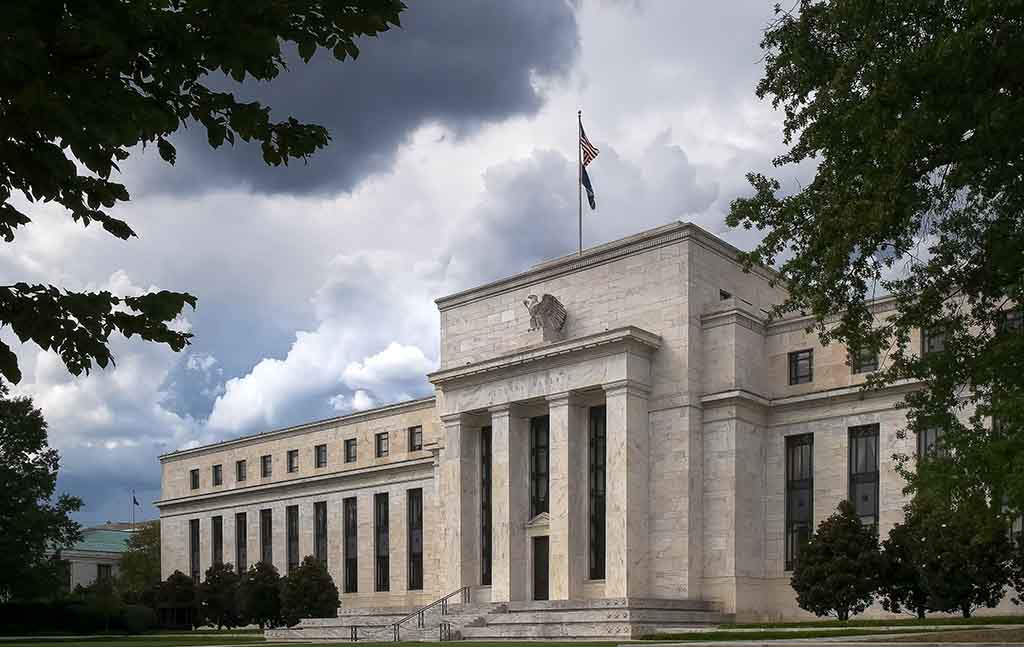
Powell’s goal as governor isn’t to interfere. He said his intention is to not interfere. He mentioned his time as a governor for almost six years prior to being the chair. He understands how difficult the role is as chair.
“You try to be heard but also collaborate with the chair and try to support the chair when you can,” he said. “When you can’t, you can’t. And I think that is the attitude that people generally take and that’s the attitude that I’ll take.”
Powell also mentioned he had been planning to retire for a while, but because of recent actions against the Fed, he felt he couldn’t leave.
“And, you know, the things that have happened really in the last three months of I think left me no choice but to stay until I see them through at least that long,” Powell said.
Warsh inheriting a Divided Fed?
The Fed voting 8-4 was quite unusual. It was unusual because it was the first time since October 1992.
Powell pointed out three of the four dissenting members thought the target range was in the right place, but they didn’t support the inclusion of an easing bias in the statement.
A reporter asked Powell whether he was handing off a divided Fed. The board has always had vigorous debates, he said. He also added their excellent debates.
“I have to say they’ve been really good. And we’re in an unusually difficult situation,” Powell said.
What Is Powell’s Legacy?
Powell didn’t have much to say about his legacy. A report said, “When the history books are written, how do you think your stewardship at the Fed will be remembered the past eight years?” He gave a simple statement to that question.
“I’m just going to say that’s for someone else to say. I’ll give you a Mulligan on that,” Powell said.
Later in the press conference, another reporter followed up and asked him about his legacy and whether there was something he was proud of or something he’d like a mulligan looking back at it. Powell gave a longer answer, but it was a pretty straightforward answer as he didn’t go into any specifics.
“Yeah, that’s hard,” he said. “I wouldn’t want to single out individual things at this point. I’ll just say, you know, all of us together have consistently tried to do what we think is best for the American people based on our tools and objectives that Congress has given us.”
Powell’s Final Words
When the press conference ended, Powell stepped away from the podium for the final time as chair. Before he left, Powell thanked everyone before giving one last joke.
“I won’t see you next time,” he said.
Other Federal Reserve News
As previously announced after the Federal January 2026 meeting, President Trump selected Kevin Warsh to succeed Powell. The process for Warsh to succeed was hitting a major roadblock until late Friday, April 24, however.
The Fed chair nominee must pass through the Senate Banking Committee first. The committee has 13 Republicans and 11 Democrats. Normally, Republicans would have enough votes to pass Warsh to the Senate floor.
At the time prior to April 24, North Carolina Republican Sen. Thom Tillis was refusing to vote on any Fed nominee, which means the vote would be 12-12, which is a deadlock. Tillis’ reason for not voting was the U.S. Department of Justice’s investigation into the central bank’s headquarters.
The Justice Department is investigating the Central Bank’s headquarters and cost overruns for the building renovation along with potential fraud and false statements Powell made to Congress about the costs. Tillis has called the investigation “weak and frivolous,” according to CBS News.
Justice Department Drops Investigation
It was announced late Friday, April 24, the U.S. Justice Department was ending its investigation into Powell and the Fed’s extensive building renovations. Tillis got assurance from the Justice Department it wouldn’t reopen the investigation over the weekend.
If the Fed’s Inspector General found any wrongdoing or criminal charges, only then would the Justice Department launch another investigation.
This means Trump’s pick for Warsh to succeed Powell should have no problems. Tillis had zero issues with Warsh himself when blocking the nomination — just the investigation itself.
The next Federal Reserve meeting is scheduled for June 16-17, 2026.
More Federal Reserve Articles
- “Federal Reserve: Fed Hold Interest Rates at January Meeting”
- “Federal Reserve: Fed Keeps Interest Rates Steady for 2nd Time in 2026”
- “Federal Reserve: Kevin Warsh Delivers 1st Press Conference While Fed Rates Remain Same in 2026”
- “Federal Reserve: Fed Leaves Interest Rates Steady Despite Inflation Concerns”
- “Federal Reserve: Fed Raises Rates Unanimously by 0.25%”