Safeload Coverage
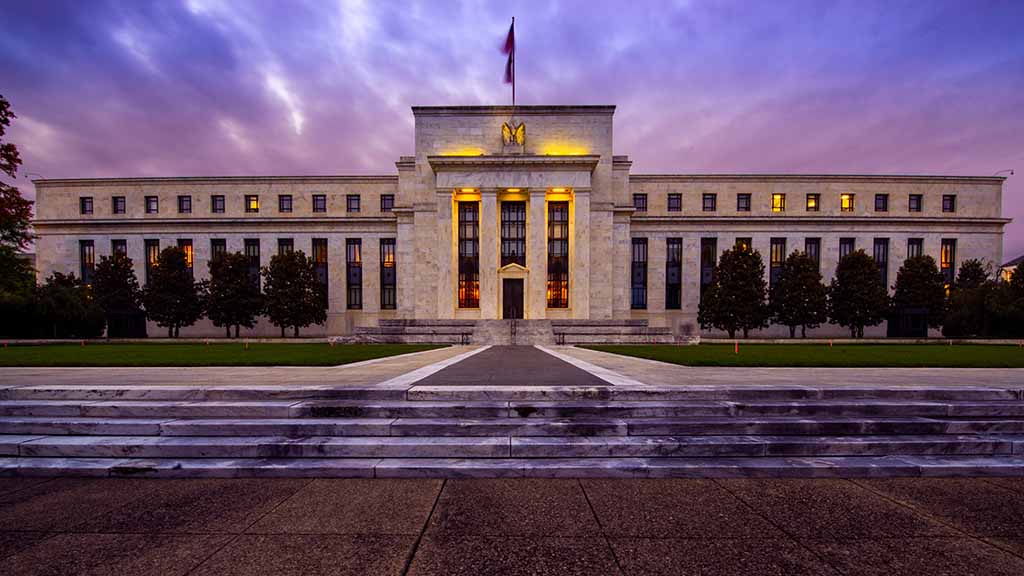
The Federal Reserve announced earlier Wednesday it would keep interest rates the same at 3.5 to 3.75 percentage points with no cuts or increases coming after the two-day July meeting. The voting for the monetary policy rate to remain unchanged was 9-3.
Federal Reserve Chair Kevin Warsh was pleased with the economy’s resilience, positive trends, solid job growth and the unemployment rate. Inflation was more elevated than the committee’s 2 percent goal, he said.
Warsh reiterated the committee’s commitment to delivering price stability, but he struggled to explain what tools, when to use those tools, and how certain tools will help the Fed get down to the 2 percent range.
Moving Help® will explain why the Federal Reserve came to this decision, and what it means for homebuyers who are looking to buy or sell a house in the near future.
Who Voted for and Against This Policy Rate?
The Federal Open Market Committee’s vote was 9-3, with nine members voting for the monetary policy rate to remain unchanged and to leave the target range for the federal funds rate at 3.5 to 3.75 percentage points.
The three dissenting members — Governors Beth M. Hammack, Neel Kashkari, and Lorie K. Logan — preferred to raise the target range for the federal fund rates by 0.25 percentage points during the July meeting. This was the second-highest number of dissenters in 2026.
The main difference was where the dissenting members wanted the policy to change, however. Previous dissenters wanted to lower interest rates. This time around, the three dissenting governors wanted to increase interest rates.
| Voting Member Name | How Did They Vote? |
|---|---|
| Kevin Warsh, chair | Yes |
| John C. Williams, vice chair | Yes |
| Michael S. Barr | Yes |
| Michelle W. Bowman | Yes |
| Lisa D. Cook | Yes |
| Beth M. Hammack | No |
| Philip N. Jefferson | Yes |
| Neel Kashkari | No |
| Lorie K. Logan | No |
| Anna Paulson | Yes |
| Jerome H. Powell | Yes |
| Christopher J. Waller | Yes |
Why No Increase to Interest Rates?
The Fed reviewed the data, and they listened to one another during the two-day meeting, and the committee decided the best course of action was to stay put with interest rates. Warsh mentioned during his first press conference that he wanted a family fight, and that’s what he got during the discussions in the two-day July meeting.
“I asked for a good family fight and I got one. That’s the purpose. That’s the design feature. I come into this meeting, even this press conference, heartened by what I’ve experienced the last two days,” he said.
They mainly discussed what powers, tools, and authority they have that they can use to deliver stable prices.
“My view, which you’ve long heard, is what’s a better way to get policy right? That’s our North Star,” he said.
What Does the Future Hold?
The future is murky. Financial markets are expecting the Federal Reserve to raise interest rates at least one time before the end of December 2026 with a hike increase coming as soon as the September 2026 Federal Reserve meeting.
When asked whether raising interest rates is the best solution to help fix the elevated inflation, Warsh didn’t provide much substance. Raising rates is one tool, but not the only tool they can use, he said.
Warsh also pointed out his task forces and getting better information and making more informed decisions from more resources. Warsh understands the impatience from American families and businesses because inflation has been elevated for 63 months, but this board has been in business for only eight and a half weeks.
“We are on-the-job, we will deliver, we are focused like a laser on making sure we can do it, but the suggestion that we’re going to be able to do it with our magic wand is one I want to disabuse you and everyone else of, but the discussion the last two days give me more confidence even than I had eight and a half weeks ago,” he said.
Warsh never provided a clear, direct answer to the question of “How will you get inflation down?” Warsh made it clear, however, that the Fed will be judged on its ability to get inflation down to 2 percent. They’re working on it, and they’ll deliver it, but again, he didn’t say how that would happen.
What Does This Mean for Home Mortgage Rates?
Because the Federal Reserve didn’t increase or cut interest rates, housing mortgage rates won’t see a rapid decline or increase in interest rates. Mortgage interest rates have increased since the last Fed meeting, but it’s nowhere near the highs seen in 2023 to mid-2025.
From Jan. 2, 2025, to July 23, 2026, a 30-year mortgage rate has hovered anywhere between 5.98 percent to 7.04 percent, according to Freddie Mac. The rates have been closer from 6.43 percent to 6.58 percent since the last Fed meeting in June.
During the same time frame, a 15-year mortgage rate has hovered between 5.35 percent to 6.27 percent, according to Freddie Mac. The rates have been closer from 5.79 percent to 5.96 percent since the last Fed meeting in June.
Both 15- and 30-year interest rates saw a trend of rates increasing since the beginning of May and continue to slightly climb higher in July.
What Does This Mean for People Looking to Move?
Housing mortgage rates are still higher than they were pre-pandemic.
Housing mortgage rates for a 30-year loan and a 15-year loan are still lower than the peak 7.79 percent 30-year mortgage rate and 7.03 percent 15-year mortgage rate in late October 2023.
While it’s true that the spring/summer is homebuying season as families look to move between the school year, it’s still a buyer’s market. U.S. pending home sales fell recently, and factors like the decline of demand, average mortgage rates, the U.S. economy, the Middle East conflict, and rising oil prices have dampened potential homebuyers, according to Redifin.
“The buyers who are in the market have more leverage than they’ve had in years,” said Vanessa Leimback, a Redfin Premier agent in Seattle, according to the Redfin article.
Other Federal Reserve News
Warsh announced he would hold press conferences for the rest of 2026 because that’s what his predecessors have done in the past. In his first meeting in June, he mentioned they would hold press conferences when the Federal Reserve has something to say.
A reporter asked what the news was today since the Fed didn’t change the rates, which is when Warsh told the press he would hold press conferences for the rest of the year.
Reviewing communications is important to Warsh, so it’s possible in 2027 that the Fed may have less press conferences.
President Donald Trump still wants rates lowered, and he believes Warsh can deliver lower rates and wants lower rates. Warsh has a “political board” to manage, he said.
When Is the Next Federal Reserve Meeting?
The next Federal Reserve meeting is scheduled for Sept. 15-16, 2026.
You also can read previous recaps of the January, March, April, June, July, and September meetings.