Safeload Coverage
How much is a down payment on a house? That’s the magical question, especially from first-time homebuyers. The answer depends on each individual person for how much should you have for a down payment.
A down payment lowers the overall loan amount, and it’s a percentage of the total cost of a home. The typical down payment ranges from 3 percent to 20 percent depending on several factors.
The Moving Help® Marketplace will explain its important and explore strategies for effective home purchasing.
Editor’s Note: Moving Help has provided this article for informational purposes only. We are not mortgage lender experts. For any questions or advice regarding loans, please consult with a qualified mortgage lender to help you.
Understanding Down Payments
When it comes to buying a home, a down payment is one part of the equation. When you purchase a home, homebuyers typically take out a loan. A down payment lowers the amount owed on the overall loan.
The higher the down payment you put down, the better loan terms and potentially lower interest rates you can receive. Interest rates have held steady after the recent U.S. Federal Reserve meeting in March 2026.
Typically, a person will put down anywhere between 3 percent to 20 percent of the total cost of a home.
Keep in mind that your down payment can influence several decisions, including your monthly mortgage payment.
Remember, closing costs are separate from a down payment.
Average Down Payment Amounts
The average down payment amounts are between 3 percent to 20 percent.
For example, if the home’s price tag is $500,000, a 20 percent down payment would be $100,000. A 3 percent down payment would be $15,000, and a 10 percent down payment would be $50,000.
One reason why people pay 20 percent vs. less than 20 percent is because of private mortgage insurance. If you default on your mortgage, private mortgage insurance protects your lender because private mortgage insurance reimburses the lender.
Location, historical trends, and personal finances will determine your average down payment amounts.
Factors Influencing Your Down Payment
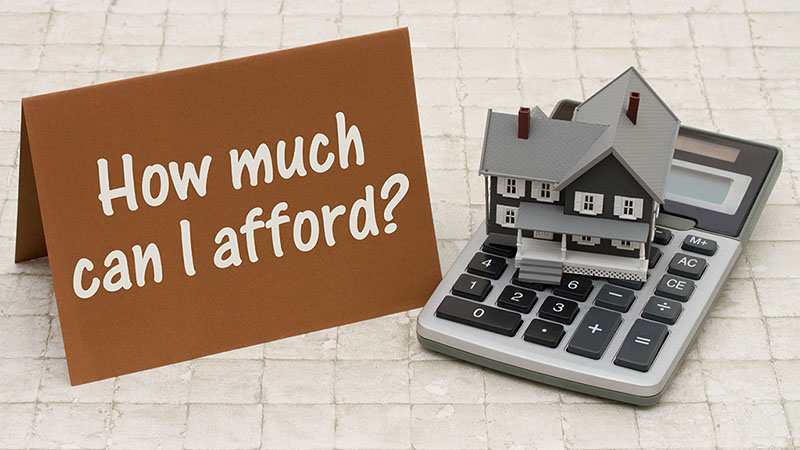
Your personal financial situation and credit score play a huge factor for your loan. Your credit score should be at least 620. It’s recommended to have a 740 or higher to receive the best interest rates.
A Federal Housing Administration loan would accept scores between 500 to 580.
Different mortgage types have different minimum down payment requirements. For example, a conventional loan requires a 3 percent down payment. A Federal Housing Administration loan requires a 3.5 percent down payment, according to Rocket Mortgage.
A Veterans Affairs loan and a U.S. Department of Agriculture loan don’t require a down payment, according to Rocket Mortgage.
Market conditions, such as interest rates, and property type also play into a down payment.
Benefits of a Higher Down Payment
When it comes to making a down payment, you’ll have multiple benefits of paying a higher down payment.
If you make a higher down payment, such as 20 percent or higher, you can avoid having to pay private mortgage insurance.
A larger down payment can help lower your monthly payments. By having lower monthly mortgage payments, you can avoid paying more interest. In the end, this is less overall cost for you in the long run.
Finally, it gives you an advantage in a competitive market. If it’s a seller’s market, or if multiple buyers are bidding for the same house, you can get an advantage. If a seller is considering two bids that are pretty even overall — with the help of your real estate agent — having a higher down payment could give you the edge that gets you your dream home.
Disadvantages of a Higher Down Payment
The main disadvantage of a higher down payment is saving up for the cost of a down payment. The average house value costs about $360,000 for the median sale price in 2026, according to Zillow. The medium list price is just under $400,000 in 2026, according to Zillow.
That means a 20 percent down payment for a $360,000 home would require a $72,000 down payment. Additionally, a 20 percent down payment for a $400,000 home would require an $80,000 down payment.
You have to make sure after saving enough for a down payment that you have enough money for closing costs, setting enough money aside for repairs and renovations. You also need to make sure you have enough money available for other expenses such as decor.
All these factors mean you must save even more money on top of paying a down payment.
How to Prepare for Your Down Payment
Obviously, you’ll need to take some time to prepare for your future down payment if you don’t have the money already. The first step is to look at your monthly budget and see where you can cut back on your expenses to save money for your down payment.
The second possible step is to work a second job or pick up a side hustle like driving Uber and Lyft, or delivering food with DoorDash or Uber Eats.
The third possible step is you can try to set a goal each week on the total dollar amount you’d like to save weekly.
Another opportunity to save money is to cut back on eating out. Instead of eating out every day for lunch, you can prepare your lunch at home, which can save you money over time.
Utilizing Financial Assistance Programs
You can find financial assistance programs when planning to purchase a house. For example, first-time homebuyers can receive financial assistance. This includes potential federal, state, and local grants.
Even homebuyers who aren’t buying their first house can still find federal, state, and local grants, which can help make purchasing a house easier.
Figure out How Much You Need for a Down Payment
How much should you have for a down payment is a personal choice that depends on your finances. It’s best to put down a 20 percent or higher down payment to avoid paying private mortgage insurance, lower monthly mortgage payment, and paying less interest overall.
Financial assistance programs exist for homebuyers, and the more you can put down for a down payment, the better the benefits will be for you.
When you’re ready to reach the big day of moving into your new home, hire moving labor from the Moving Help Marketplace for loading or unloading, along with other moving labor services to make your moving day easier.