Safeload Coverage
No matter where you move, packing fragile items needs to be taken seriously and done carefully. Fragile items are delicate, sentimental, and easy to break. You’ll want the right supplies, and you’ll want to take your time when you pack fragile items.
Moving Help® will provide you with eight steps on how to keep your items safe, secure, and prevent them from breaking. Let’s get started.
Step 1: Gather the Right Packing Supplies
While you can use clothes and towels to wrap non-fragile items, it’s best practice to use packing supplies for fragile items. That doesn’t mean you can’t use clothes and towels, it just means your belongings might not be as secure.
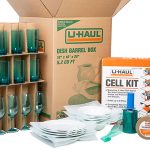
U-Haul has everything you need for your packing needs. When it comes to fragile items, here are some packing supplies and moving boxes we recommend you use to pack fragile items.
Packing Supplies Needed
Moving Boxes Needed
“The basic items needed to pack fragile belongings include bubble (cushion), packing paper, packing peanuts, and appropriately sized boxes, preferably small to medium,” said Daniel Romero, Moving Helper business development coordinator and former Moving Helper. “Packing paper is a cost-effective option that provides extra cushioning inside the box and helps prevent glasses, plates, and other delicate items from clanking against one another while in transit.”
Step 2: Take Your Time
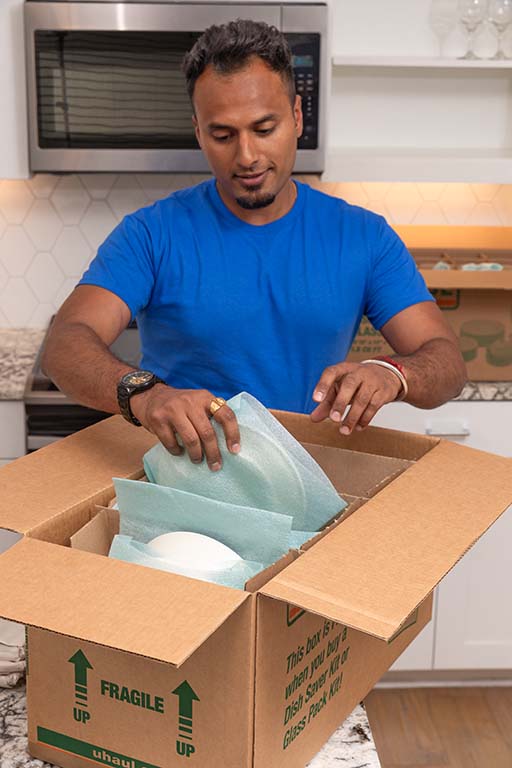
The most missed step in how to pack fragile items for moving is to take your time. Make sure you give yourself plenty of time to pack all your fragile belongings.
You don’t want to rush this part because sloppy packing can result in damaged items.
Packing fragile items needs care.
Step 3: The Smaller the Box the Better
While you could use a medium moving box, it’s recommended to use a small moving box or smaller.
You don’t want the moving box to be too heavy to lift or fall apart and break from the bottom when moving.
While you might get away with using flimsy or reused boxes for non-fragile belongings, that won’t work for fragile belongings.
The fragile contents inside a moving box must be easy for you or your Moving Helpers to handle during the moving process.
“Boxes that are too heavy are typically forced to the bottom of the load, where multiple boxes may be stacked on top of them, increasing the risk of damage,” Romero said. “Lighter boxes are more likely to be placed on top of the stack, which is often the safest position for fragile items during transport.”
Step 4: Protect the Moving Box
Before you begin wrapping or placing fragile belongings into a moving box, you must prepare the box first.
You should use several strips of packing paper tape for the bottom of the moving box. Inside the moving box, you should fill the bottom of the box with either packing paper, Enviro-Bubble, or packing peanuts.
This will help give the bottom of your moving box some cushion for your fragile belongings.
“The best way to pack fragile items is to use appropriately sized boxes with plenty of padding, while avoiding overpacking,” Romero said.
Step 5: Wrap Fragile Items in Packing Paper, Enviro-Bubble, or Both
Packing paper is great for items that are breakable but not super fragile. Enviro-Bubble is best for super breakable belongings. Of course, Moving Help recommends using both for maximum protection.
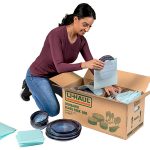
You’ll wrap your item in packing paper first. Then you’ll wrap the item in Enviro-Bubble. It gives you maximum protection for using Enviro-Bubble, but it doesn’t require as much Enviro-Bubble because packing paper is easier to wrap around an entire item with packing paper.
Step 6: Use the Right Box for the Right Item
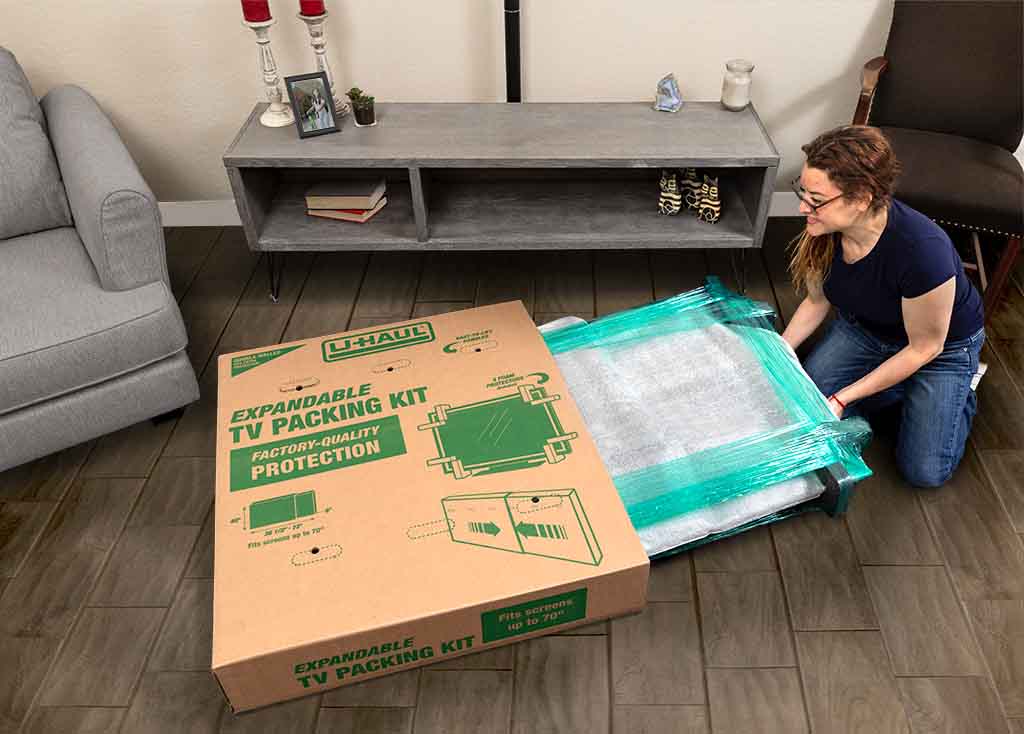
You shouldn’t use a small moving box for pictures. You should use the original picture box. If you don’t have the original box, you can use a mirror and picture box kit from U-Haul.
Depending on the type of picture you own, you’ll need to use your judgement on what’s the best way to pack it.
Some pictures might be OK with packing paper. Some pictures might require Enviro-Bubble. Other pictures might need another way to protect it before placing it into a moving box.
Step 7: Fill Empty Spaces and Use Dividers
As you fill your moving box with your fragile belongings, you’ll want to fill the empty spaces with some of the following options:
- Packing peanuts
- Packing paper
- Enviro-Bubble
- Moving blankets
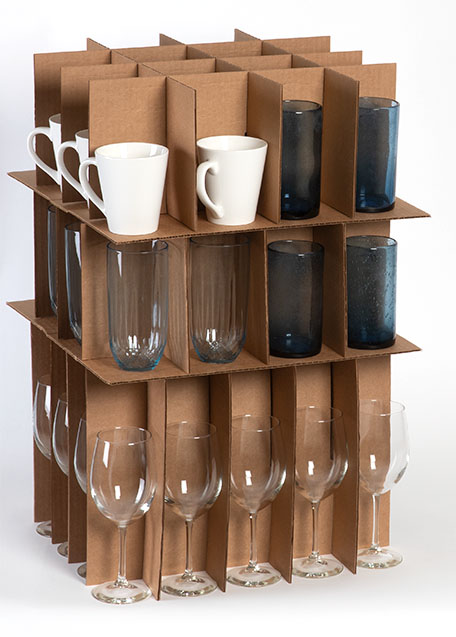
Depending on the type of box, you might use cell dividers. Cell dividers help keep plates or glasses from banging against one another. Plus, a separate compartment for each item adds an extra level of protection.
Step 8: Tape Shut and Label Clearly
After you’re done packing your box, you’ll want to tape shut the top of the box with packing paper tape with several strips.
You want to clearly label your moving box. For example, don’t label the box just “Kitchen.” You should label what’s specifically inside the moving box. So instead of labeling the box “Kitchen,” you can label it, “Wine glasses, glass cups, ceramic mugs, and pint glasses.”
Additionally, make sure you write the words “FRAGILE” in giant letters on the side of the box. The more places you write the word “FRAGILE,” the better it’ll be for anyone moving the box.
“During the initial walkthrough before loading begins, customers should point out and identify which boxes and furniture items are most delicate,” Romero said. “Boxes should be clearly labeled, ‘Fragile’ on both the top and sides using bold lettering or visible stickers, making it easy for movers to recognize and handle them with extra care.”
On top of that, you should draw an arrow indicating where the top of the box is. That way, anyone who is moving the box knows where to lift from the bottom of the box, and they don’t accidentally place the box upside down.
“A U-Haul truck rental with a Mom’s Attic is ideal for transporting fragile items, especially small to medium sized boxes, as it provides a separate and secure space away from heavier household items,” Romero said.
Other How-to Guides
Besides learning how to pack fragile items for moving, here are eight other helpful guides that’ll assist you in your packing adventures.
How to Pack Fragile Items for Moving Today
When you have the right supplies, it’s easy to learn how to pack fragile items for moving. With these eight steps from Moving Help, you’ll be sure that your items are protected and safe during the moving process
If you need help packing or unpacking, find packers and labor-only movers near you on the Moving Help Marketplace — just make sure you have all the packing supplies and tape needed prior to them arriving for your move. If you need loading or unloading help, our Moving Helpers can assist you with that as well.