Safeload Coverage
When hiring new employees, companies will do whatever it takes to hire their ideal candidate. Sometimes that includes companies offering a job relocation assistance package to a prospective candidate.
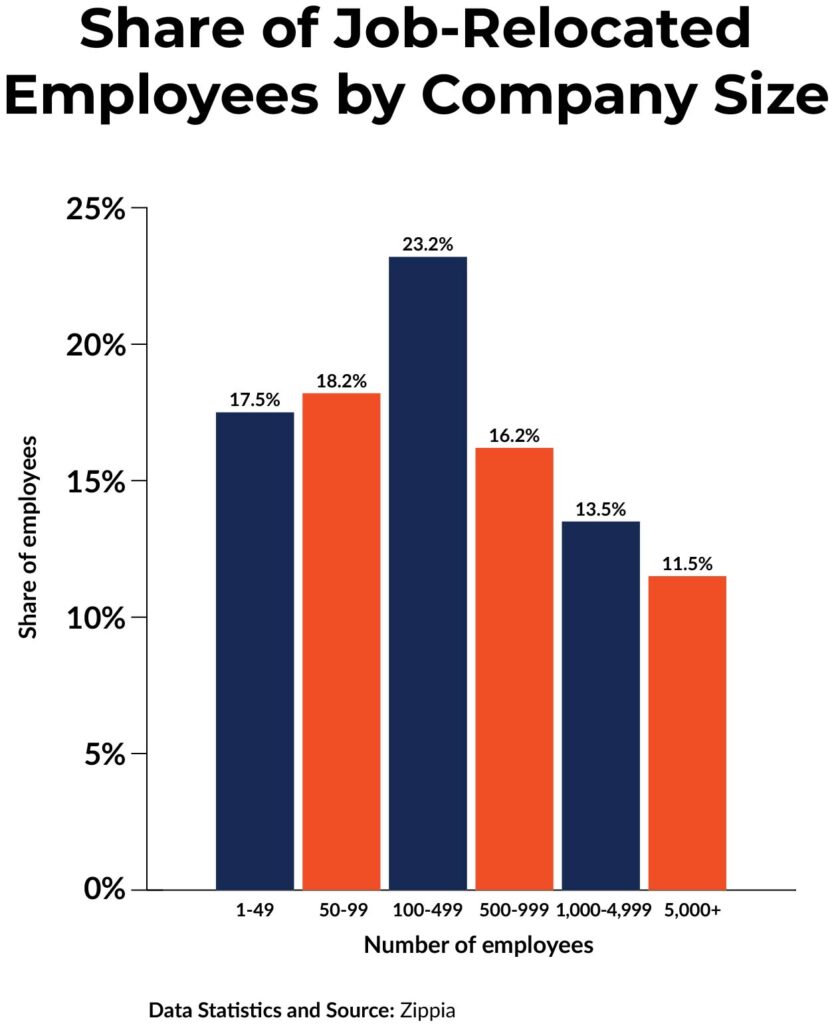
Job seekers are willing to relocate for the right price. Companies with 100 to 499 employees are the most likely to support job relocations at 23.18 percent, according to data in 2023. Of course, job relocations will be dependent upon the role, the industry, and the company’s size. The Moving Help® Marketplace will explore how often companies pay for job relocation in this guide.
How Common Is Relocation Assistance?
Job relocation assistance is common. In fact, 64 percent of American businesses offer employer-paid moving costs, according to The National Relocation Institute.
Employers are more likely to relocate internal employees who are transferring vs. external candidates who are newly hired. 38 percent of employers pay moving expenses for new hires vs. 66 percent of employers pay moving expenses of current employees, according to Zippia.com.
Other factors for how common job relocation assistance depend on the roles and industries. Senior roles or higher management roles are more likely to receive assistance compared to entry-level jobs.
Tech, engineering, and health care industries are more likely to receive assistance compared to retail, hospitality, and administrative industries.
When Are Companies Most Likely to Pay?
Companies are more likely to pay for hard-to-fill roles or specialized roles. Executive, leadership, or management positions could see job relocation assistance as well.
Depending on the situation, internships could see a small assistance package as well.
Moving across the country or moving internationally also could result in job relocation help. Moving out of state is obviously more expensive, which leads to a higher chance of receiving help or asking for assistance as part of your compensation package.
Company Size Factors
Did you know that a company’s size could factor into determining which companies are more likely to support job relocations? Companies with 100 to 499 employees are the most likely to offer assistance, according to Zippia.com.
Smaller- to medium-sized companies offer more relocation assistance compared to larger companies, according to Zippia.com. Below are the statistics based on company size, according to Zippia.com.
- 1-49 employees: 17.5%
- 50-99 employees: 18.2%
- 100-499 employees: 23.2%
- 500-999 employees: 16.2%
- 1,000-4,999 employees: 13.5%
- 5,000+ employees: 11.5%
When Companies Typically Don’t Offer It
Despite industries, roles, and company size, not every company will offer job relocation assistance even when they fit the right mold. Every situation is different, which is why you should always ask whether a job relocation package would be included.
Some examples of when companies don’t offer it are when they’re hiring entry-level jobs or have high-volume hiring roles. Local candidates aren’t likely to see relocation compensation since they’re already local.
Small businesses with limited budgets might not be able to support job relocation. They also might offer it on a smaller scale. Remote-first companies or remote positions aren’t likely to see it either since the job is working remotely.
5 Factors on When Job Relocation Assistance Is Offered
Many factors can be included when companies offer candidates or current employees a job relocation package. We’ll discuss five more common factors.
Again, this will all depend on the role, industry, and the company. The five more common factors are:
- Hiring urgency
- Labor market competitiveness
- Company size
- Internal vs. external hire
- Economic conditions
What Does Relocation Assistance Cover?
Every job relocation assistance package is different. Companies offer different packages, and even employees ask for different assistance in their packages.
Some might want help for moving expenses, some might prefer lump-sum payments, or others might forego those options and prefer a sign-on bonus. Relocation packages typically cover:
- Moving expenses
- Temporary housing
- Travel costs
- Lump-sum payments
- Sign-on bonuses instead of formal packages

You’ll have to ask your company what they can and can’t cover as far as assistance packages go. Once they tell you, this will provide you with a clearer picture of what to expect if you plan to relocate for a new or current job.
Can You Negotiate Assistance?
Yes, you can absolutely negotiate your job relocation assistance package. It’s just like anything else — salary, paid time off, future severance, etc. Your job has probably negotiated everything they offer for employee compensation.
Of course, some companies might or might not budge on certain parts of your compensation package, but you should always politely ask whether assistance is negotiable.
Remember this idea. If you never ask, the answer is always “No.”
Companies Often Offer Relocation Assistance
As you can see, many companies offer job relocation assistance to prospective employees and current employees. Small- to medium-sized companies more likely offer relocation assistance than larger companies. Larger companies might offer more money or more comprehensive packages, however.
Packages can cover different items, and not all packages are the same, and you should try to negotiate them.
Good luck in trying to relocate for a new job opportunity. Remember, the Moving Help Marketplace is here for you with labor-only movers who offer loading and unloading services along with other moving services.