Safeload Coverage
Everyone talks about an emergency fund, but how do you build an emergency fund? With a game plan, you can learn how to build an emergency fund on your own to protect your future. The Moving Help® Marketplace has 10 ways you can try to save money for your emergency fund.
Don’t have time to read all 10 ways? Click on the section below to jump down to the section you want to specifically read.
Saving an Emergency Fund in 10 Ways
You might be able to use every suggestion we list below. You also might choose to use five of the 10 suggestions. Maybe only one way works for you. No matter what, the goal is to try one solution that works for you when it comes to building an emergency fund.
1. Set a Manageable Goal
The first step is to create a manageable goal. Most experts recommend trying to have at least $1,000 in your emergency fun. Even if you only have $50 in your emergency fund, it’s a start.
You should create goals that you can reach as you build toward your ultimate goal. By making it feasible, you’re more likely to stick to it. Additionally, you should write down these goals because you’re more likely to accomplish your goals when you write them down, according to studies.
2. Start With Small, Realistic Contributions
Rather than trying to build an emergency fund with large amounts, you should start with small, realistic contributions. Even $20 a week can go a long way. If you saved $20 each week for one year, you would build $1,040 in one year.
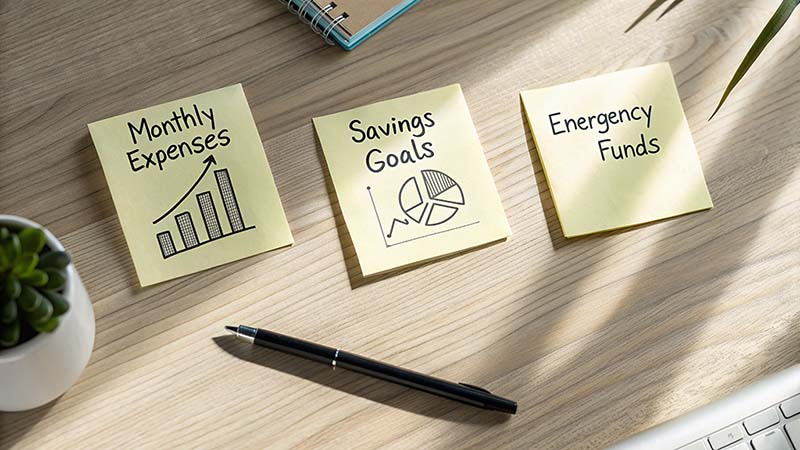
You’re also likely to keep at it with smaller contributions toward your emergency fund vs. one-off, larger contributions toward your emergency fund.
3. Monitor Your Progress
You should find a way to keep track of your progress. You can use an Excel spreadsheet, a website, or an app to help monitor your progress. Whatever you’re most comfortable using or are most likely to stick with is what you should use to check your progress.
It’s good to review your progress to see whether you’re ahead of schedule, on time, or behind schedule to reach your goal.
4. Create a Budget to Track Income and Expenses
One of the best ways to improve your emergency fund is to create a budget for yourself. A budget sheet can keep track of your income and expenses, especially when it comes to cost of living. You can see how much money you bring in each month, and how much money you spend each month.
A budget can help you figure out where you can cut back on expenses. A budget can show you how to build an emergency fund by redirecting some of your money toward your emergency fund instead of going to unnecessary expenses.
5. Get a Second Job
If you cut back on your expenses as much as possible, and you can’t save the amount of money you want for your emergency fund, you’ll have to consider other alternatives. One alternative is to get a second job.
By getting a second job, you can increase the income you bring in each month. Of course, this will mean working more hours, but if you want to reach your emergency funds quicker, it’s one option.
6. Pick up a Side Hustle
If you don’t want to get a second job, but you want to earn more money each month, you could pick up a side hustle. A side hustle is a way to earn more money, but you can work at it on your own time on your own schedule.
Some side hustle options include being a driver for services like Uber or Lyft, be a courier for DoorDash or Uber Eats, online tutoring or teaching, freelance work like writing, photography, or graphic design, and more, cleaning, handiwork, or pet sitting or pet walking for services like Rover.
7. Put Your Money Into a High-Yield Savings Account
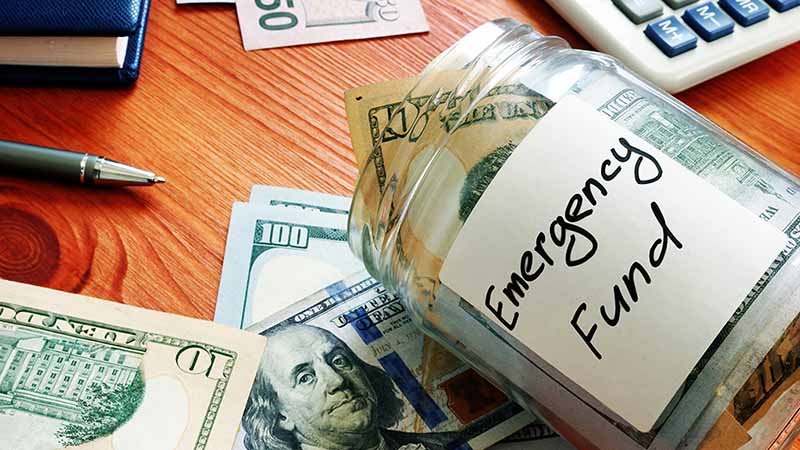
Most people put their money into a savings account in the same place where they bank for their checking account. Interest in a regular savings account isn’t high. If you put your emergency funds into a high-yield savings account, you can earn more money each month on interest.
You’ll just want to consider all your options — such as interest rates, potential account fees, and your ability to withdraw your money. Don’t forget, your emergency funds should be accessible at any point in time, so you can quickly access them during an emergency.
8. Reduce Spending
Another way to start saving an emergency fund is to reduce your spending. One way to do this is to figure out what you’re purchasing is a “want” vs. a “need.” A need is something essential to survive such as housing, food, and transportation. Whereas a want enhances your quality of life but isn’t necessarily essential to survival.
By reducing your spending toward a “want,” you can use those available funds that can be directed toward your emergency fund.
9. Pay off Loans or Debt
This one can be tricky, but in the long term, this suggestion can work out for you. If you have student loans or credit card debt, you should try pay them down as quickly as possible. For example, if you’re able to pay off your student loans, your monthly payments that would’ve gone to your student loans can instead go directly to your emergency funds.
10. Lower Insurance Cost
Most people get insurance — whether it’s car insurance, renter’s insurance, or home insurance — and then don’t switch companies. Insurance companies might raise rates after each policy renewal. You should review your insurance policies when it gets closer to renewal to see whether you can find more affordable insurance with another insurance company with the same coverage. You could save hundreds to thousands of dollars doing so.
Some insurance companies offer discounts by bundling multiple policies together. Companies also offer discounts when paying a one-time lump sum vs. paying each month for your policy. Finally, some insurance companies offer discounts for your next policy. For example, Progressive has a program called Snapshot where if a customer drives safely all the time, they could save money on their upcoming policy renewal.
Why Build an Emergency Fund?
So why should someone build an emergency fund? It’s a great way to protect yourself from life’s difficulties. You never know when an unexpected expense will occur. If you lose your job, have a medical emergency, or a pipe burst in your home, you’ll need money to pay for these costs.
A good starting point is to save $1,000 for your emergency fund. Once you reach $1,000, you can continue to build it by having three to six months saved in your emergency fund.
Saving an Emergency Fund Starts Today
Now that you know how to build an emergency fund, you can start building it today. Remember, the Moving Help Marketplace has provided you with 10 ways to build your emergency funds. Whether you use one or all 10 ways, this will help prepare you for building an emergency fund.