Safeload Coverage
Moving a washer and dryer requires careful preparation, the right equipment, and at least one capable helper. You’ll need to disconnect the utilities, drain and secure the appliances, protect them with furniture pads, and use an appliance dolly to move and transport them. Always check each appliance owner’s manual before getting started because preparation instructions can vary by model.
This guide explains how to prepare, move, transport, and reconnect a washer and dryer. If you’d rather get help with the heavy lifting, independent Service Providers available through the Moving Help® Marketplace may offer heavy-appliance moving services.
What You Need to Move a Washer and Dryer
Gather your equipment and supplies before disconnecting either appliance. An appliance dolly is designed for heavy appliances and includes a strap that helps secure the load. Furniture pads also can help protect appliance surfaces during the move.
You may need:
- Washer and dryer owner’s manuals
- Appliance dolly with a securing strap
- Furniture pads or moving blankets
- Moving straps or tie-downs
- Adjustable wrench or slip-joint pliers
- Bucket or shallow container
- Plastic stretch wrap, towels, or rags
- Tape or fasteners for cords and hoses
- Work gloves
- Closed-toe shoes
Check the owner’s manuals for model-specific preparation instructions and any additional tools or shipping hardware you may need.
Plan Your Route Before Moving a Washer and Dryer
Before moving either appliance, plan a clear route from the laundry area to the moving vehicle. Washers and dryers can be difficult to maneuver around narrow doorways, sharp corners and stairs, so checking the path ahead of time can help you identify potential obstacles.
Measure the Appliances and Openings
Measure the width, depth, and height of each appliance. Then compare those dimensions with every doorway, hallway, stairway, and elevator along the route. Remember to account for the additional space needed to maneuver an appliance dolly.
If an opening is too narrow, check whether a door can be removed safely or whether another route is available. Do not attempt to force an appliance through an opening.
Clear and Protect the Moving Path
Remove boxes, rugs, furniture, decorations, and other objects from the route. Make sure everyone helping with the move knows which path you plan to use.
Protect floors and other surfaces as needed. Furniture pads can help protect the appliances, while appropriate floor protection may help reduce contact between the dolly and finished surfaces.
Plan for Stairs and Tight Spaces
Look for stair landings, low ceilings, narrow turns, and other areas where the appliance may be difficult to control. Decide where each person will stand and how you will communicate before moving the appliance.
How to Prepare a Washing Machine for Moving
Before disconnecting your washing machine, review the owner’s manual for model-specific moving instructions. The manual should be your primary guide for draining the washer and securing its internal components.
Clean and Dry the Washer
Run the washer’s recommended cleaning cycle before moving day. Once the cycle is complete, remove any clothing and allow the interior to dry.
Disconnect the Power and Water Supply
Turn off the washer and disconnect it from its power source according to the owner’s manual. Shut off both water-supply valves before removing any hoses.
Disconnect and Drain the Hoses
Place a bucket or shallow container beneath the connections to collect remaining water. Disconnect the supply hoses one at a time, then empty the drain hose according to the manufacturer’s instructions.
Inspect the hoses as you remove them and keep all washers, fittings and other small components together. Secure the hoses and power cord, so they do not drag or get lost while the appliance is being moved.
Secure the Washer Drum
Check the owner’s manual to determine whether the washer requires shipping bolts, transit bolts or another manufacturer-approved method for securing the drum. Front-load and top-load washers may have different requirements.
Protect the Washer
Close the washer door or lid and secure it according to the manufacturer’s instructions. Wrap the exterior with furniture pads or moving blankets, making sure you can still access the areas needed to position and secure the appliance on the dolly.
How much does a washing machine weigh?
According to Home Depot
Depending on the type of washing machine, your washing machine can weigh
anywhere from about 150 pounds to about 230 pounds.
How to Prepare a Dryer for Moving
Dryer preparation depends on whether the appliance is electric or gas-powered. Review the owner’s manual first, then identify the dryer type before disconnecting any utility or vent connection.
Clean the Dryer
Empty the dryer and remove lint from the lint screen. Make sure no clothing or loose items remain inside the drum.
Disconnect the Dryer Vent
Follow the owner’s manual when separating the dryer from the vent connection. Keep removable clamps, fittings, and vent components together, so they’re available at the destination.
Prepare an Electric Dryer
Turn off the dryer and disconnect it from its power source according to the owner’s manual. Secure the power cord to the appliance, so it doesn’t drag or become caught while the dryer is moved.
Prepare a Gas Dryer
Gas-dryer disconnection requirements can vary. If you can’t do it yourself, arrange for a qualified professional to help you with the entire process.
Do not attempt to disconnect the gas connection unless you are qualified to perform the work.
Secure and Protect the Dryer
Secure the door and any removable components according to the owner’s manual. Wrap the dryer with furniture pads or moving blankets, then secure loose cords and vent components separately.
How to Move a Washing Machine
After preparing the washer according to its owner’s manual, use an appliance dolly to move it along the route you planned. Follow these steps for success:
- Wrap the washer: Cover the appliance with furniture pads or moving blankets. Keep the back accessible if you still need to secure cords or hoses.
- Position the appliance dolly: Place the dolly at the center of the washer, then carefully ease the appliance onto the dolly with help from another capable adult.
- Secure the washer to the dolly: Fasten the dolly strap around the appliance according to the equipment instructions. Confirm that the washer is stable before moving it.
- Keep the washer upright: Move and transport the washer in the position specified by its manufacturer. Avoid placing the washer on its side unless the owner’s manual specifically permits it.
- Move through the planned route: Travel slowly through doorways, hallways, and turns. One person should control the appliance dolly while the other watches for obstacles and helps guide the washer.
- Use extra care around stairs: Review the equipment instructions before taking an appliance dolly onto stairs. Stop and get additional help if you cannot maintain control of the washer.
- Load the washer: Use the moving vehicle’s ramp when available, following the ramp and dolly instructions.
- Secure the washer for transportation: Position and secure the appliance so it can’t shift or contact other items while the vehicle is moving.
How to Move a Dryer
Once the dryer has been disconnected and prepared, wrap it with furniture pads or moving blankets before placing it on an appliance dolly. Do not begin moving a gas dryer until its gas connection has been addressed by someone qualified.
- Secure loose components: Make sure the power cord, vent components and other removable parts are secured or packed separately.
- Wrap the dryer: Cover the appliance with furniture pads or moving blankets to help protect its exterior.
- Position the appliance dolly: Center the dolly against the dryer and carefully ease the appliance onto it with help from another capable adult.
- Secure the dryer to the dolly: Fasten the appliance with the dolly’s straps. Check that the dryer is stable before moving it.
- Follow the planned route: Move slowly through doorways and hallways. Have one person control the dolly while the other guides the appliance and watches for obstacles.
- Take added care on the stairs: Review the appliance-dolly instructions before navigating the stairs. If the dryer can’t be controlled throughout the route, get additional help.
- Load the dryer: Use the vehicle ramp when available and follow the instructions provided with the ramp and appliance dolly.
- Secure the dryer for transportation: Position and tie down the dryer so it can’t shift or contact other items during the trip.
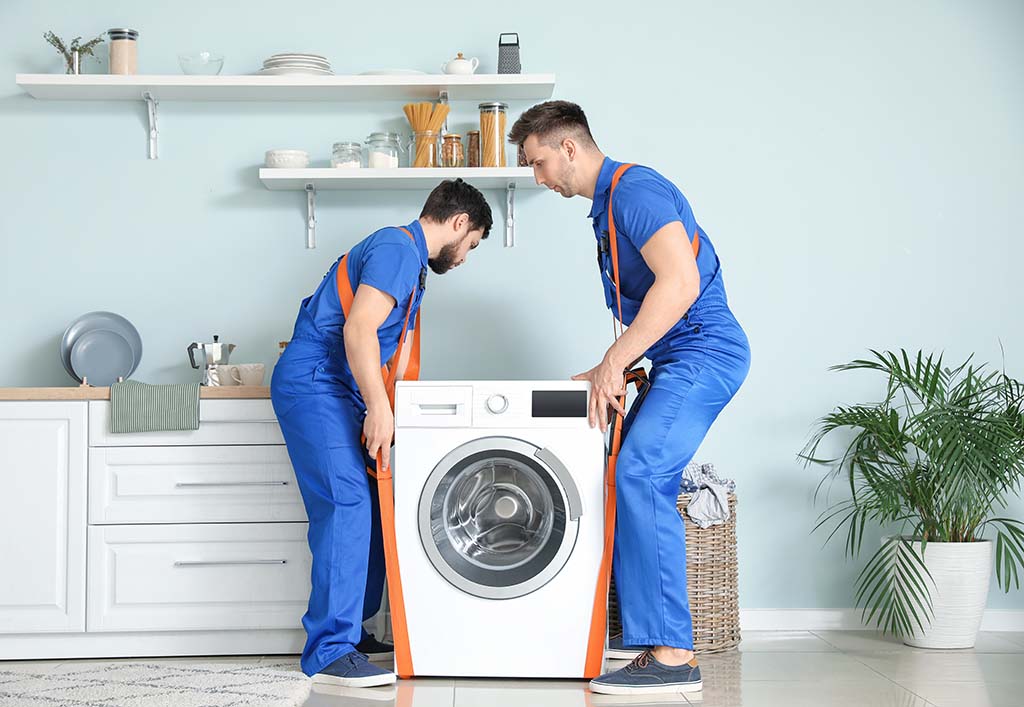
How to Move a Stacked Washer and Dryer
Moving a stacked washer and dryer requires additional planning because the configuration may be taller, heavier, and harder to control than either appliance itself. Before moving the unit, review the owner’s manuals and determine whether you have two separate appliances connected by a stacking kit or a single-piece laundry center.
Identify the Appliance Configuration
Look for separate model numbers and owner’s manuals for the washer and dryer. Two separate appliances may be connected with a manufacturer-approved stacking kit, while a laundry center is designed as one appliance.
Determine Whether the Appliances Must Be Separated
Check the manufacturer’s instructions to determine whether a stacked pair must be separated before moving. If separation is required, follow the approved procedure for removing the dryer and stacking hardware.
Prepare Each Appliance
If the units are separated, prepare the washer and dryer individually using the steps covered earlier in this guide. That includes draining and securing the washer, disconnecting the dryer vent, and addressing electric or gas connections.
For a single-piece laundry center, follow its owner’s manual for utility disconnection, internal-component preparation, and transportation position.
How to Transport a Washer and Dryer
Transport the washer and dryer in the position recommended by each appliance manufacturer. Place the appliances inside a U-Haul truck rental, cargo van, or a U-Box storage container, or another transport option. You should leave the furniture pads in place and use tie-downs to secure each appliance, so it can’t shift during the trip.
Before driving, check that the appliances are stable and that nearby items cannot press against their doors, controls, cords or connections.
How to Reconnect a Washer and Dryer After Moving
Once the appliances are in place, remove the furniture pads and inspect the washer, dryer, hoses, cords, and vent components. Reconnect each appliance according to its owner’s manual.
- Position and level the washer.
- Reconnect the washer hoses, drain hose, and power.
- Reconnect the dryer vent and power.
- Arrange qualified assistance for a gas-dryer connection.
- Check the washer connections for leaks and test both appliances as directed by their manuals.
When to Get Help Moving a Washer and Dryer
Consider getting additional help if:
- The route includes stairs, narrow doorways, or sharp turns.
- You’re moving a stacked pair or single-piece laundry center.
- You don’t have a capable helper or suitable moving equipment.
- You can’t keep the appliance controlled along the entire route.
- The move involves connections that require qualified assistance.
Pause before moving the appliance if you are uncertain about the route, equipment, or manufacturer’s instructions. Getting help before the washer or dryer is loaded onto the dolly is easier than changing the plan midway through the move.
Hire Moving Help for Your Washer and Dryer
Moving a washer and dryer doesn’t have to be a DIY job. You can hire local Service Providers from the Moving Help Marketplace who may offer appliance-moving services.
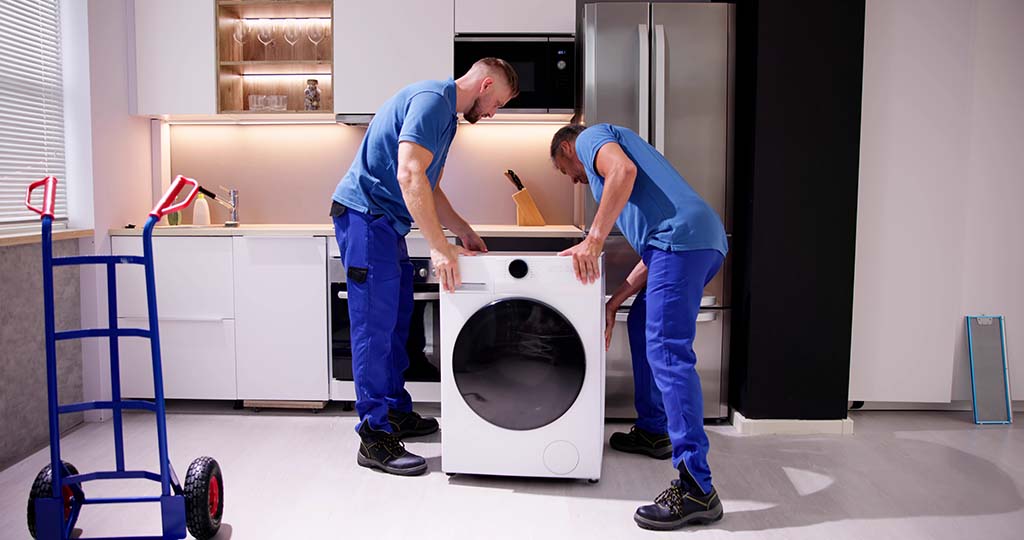
When comparing Service Providers, confirm your selected provider offers washer-and-dryer moving and has the equipment needed for your job because providers aren’t required to bring moving equipment with them.
Frequently Asked Questions
Q: Can I Move a Washer and Dryer by Myself?
A: You shouldn’t move the washer or dryer by yourself. These appliances are heavy and difficult to control, especially around stairs, narrow doorways, and sharp turns. Use an appliance dolly and consider additional help if you can’t control the appliance throughout the entire route.
Q: How Hard Is It to Relocate a Washer and Dryer?
A: Moving a washer and dryer can be challenging because both appliances must be disconnected, prepared, protected, loaded, and secured for transportation. The difficulty also depends on the appliance configuration and moving route. Stairs, tight spaces, and stacked units may require additional assistance.
Q: How Long Does a Washer Need to Sit Before Moving?
A: Allow the washer to drain and dry before moving it. The required preparation time can vary by model, so follow the owner’s manual for draining, drying and securing the washer.
Q: What Can I Use to Move My Washer and Dryer?
A: Use an appliance dolly with a securing strap, furniture pads or moving blankets, and suitable tie-downs. You also may need basic tools, a bucket, towels, and at least one capable helper.
Q: How Do You Move a Washer and Dryer Without a Dolly?
A: An appliance dolly is the recommended tool because it provides leverage and includes a strap for securing heavy appliances. If you don’t have suitable moving equipment, pause the move and rent the appropriate equipment, or get additional help rather than attempting to carry the appliances by hand.
Q: How Many People Does It Take to Move a Washer and Dryer?
A: Use at least two adults, including one person to control the appliance dolly and another to guide the appliance and watch for obstacles. A stacked unit, stairs, or a difficult route may require additional assistance.
Q: What Is the Best Tool for Moving Washing Machines?
A: An appliance dolly is the appropriate moving tool for a washing machine. The U-Haul appliance dolly includes a securing strap and is designed for washers and other heavy appliances. Check the dolly’s capacity and instructions before loading the washer.